How to Sample Perfume Without Buying on the First Spray
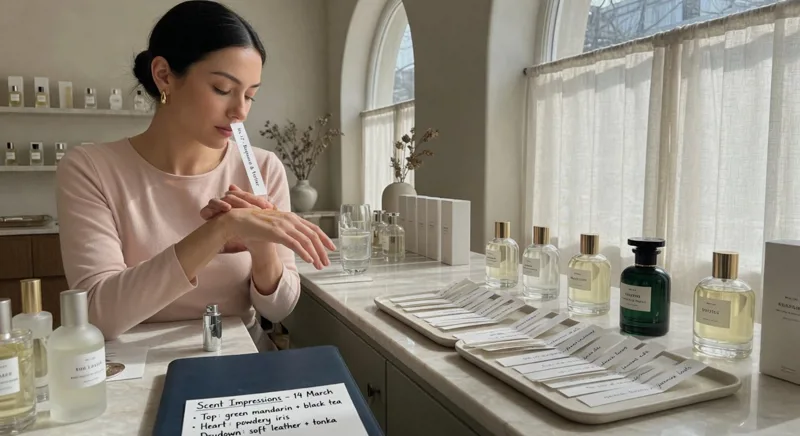
Learning how to sample perfume without buying on the first spray can save money, prevent disappointing purchases, and help you find a scent that truly suits your skin. The key is to slow down, test strategically, and experience the fragrance from its opening notes to its final dry-down.
Why One Spray Is Not Enough
A perfume changes as it develops. The first few minutes reveal the top notes, which are usually the freshest and most fleeting ingredients. After that, the heart notes appear, followed by the deeper base notes that remain for several hours.
That first impression can be appealing—or misleading. A fragrance that smells sharp at first may become soft and creamy later. Likewise, a bright citrus opening may fade into woods, musk, amber, or vanilla. Instead of asking only, “Do I like this perfume right now?” ask, “Will I enjoy wearing this fragrance throughout the day?”
Start With Perfume Blotter Strips
When sampling several fragrances, begin with paper blotters rather than applying every perfume to your skin. This helps narrow your choices without creating a confusing mixture of scents.
- Label each blotter with the perfume name.
- Spray from a consistent distance, using the same number of sprays each time.
- Wait several seconds for the initial alcohol impression to fade.
- Smell the strip from a short distance rather than pressing it directly against your nose.
- Write down three simple impressions, such as fresh, smoky, creamy, powdery, woody, or sweet.
Limit your first round to roughly three or four fragrances. Testing too many perfumes at once can cause olfactory fatigue, making it difficult to distinguish one scent from another. Take a short break between groups and smell clean air instead of relying heavily on coffee beans.
Move Only Your Favorites to Skin
Paper can show a perfume’s general character, but it cannot fully reveal how the fragrance performs on your body. Skin chemistry, temperature, natural oils, and personal care products can influence the way a perfume smells and lasts.
Choose one or two finalists and apply them to separate areas, such as opposite wrists or inner elbows. Use clean, unscented skin and avoid testing over scented lotion, deodorant, body oil, or another perfume. Do not test on irritated, freshly shaved, or broken skin.
Apply a small amount and let it dry naturally. Avoid rubbing your wrists together, because rubbing can spread the fragrance unevenly and make comparisons less reliable.
Follow the Perfume Dry-Down Timeline
The most useful perfume test involves checking the fragrance at several stages rather than judging it immediately.
| Testing stage | What to notice |
|---|---|
| First 5 minutes | Brightness, alcohol, citrus, herbs, spice, sweetness, and overall intensity |
| 15–45 minutes | The heart of the fragrance, including floral, fruity, aromatic, or spicy notes |
| 1–3 hours | Balance, projection, comfort, and whether the scent still matches your taste |
| 3–6 hours | The dry-down, including woods, musk, vanilla, amber, leather, or resin |
The dry-down is especially important because it represents how the fragrance may smell for much of the day. Make notes at each stage, including whether the perfume becomes more pleasant, weaker than expected, too sweet, too powdery, or irritating.
Test Perfume in Real-Life Conditions
A fragrance may smell different in a cool store, a warm car, an office, or outdoors. Heat can increase projection, while cold air may make a scent feel quieter. Clothing, activity, and humidity can also affect how long perfume lasts.
After testing a sample, continue with your normal routine. Notice how often you smell the fragrance without deliberately lifting your wrist. Ask yourself:
- Do I enjoy the scent after several hours?
- Does it feel appropriate for work, evenings, or everyday wear?
- Is the projection comfortable, or does it feel overwhelming?
- Does the perfume remind me of the style I expected?
- Would I want to wear it again tomorrow?
That final question is often more useful than an exciting first impression.
How to Avoid Skin Irritation
If your skin is sensitive or you have experienced fragrance reactions before, be cautious. Stop using a perfume if it causes burning, itching, redness, swelling, or a rash. A medical professional can help evaluate suspected fragrance allergy or contact dermatitis.
For a safer first test, spray a blotter before applying perfume to your skin. When you do test on skin, use a small area and avoid damaged or freshly shaved skin. A reaction may not always appear immediately, so pay attention to the test area later in the day.
Use a Simple Perfume Sampling Checklist
- Test on blotter paper before using skin.
- Sample only a few fragrances per session.
- Use clean, unscented skin.
- Keep each perfume on a separate area.
- Do not rub the application area.
- Revisit the scent after 15 minutes, one hour, and several hours.
- Record both scent quality and perfume longevity.
- Wait at least a day before making a purchase decision.
Make the Decision After the Full Wear
The best way to sample perfume without buying on the first spray is to treat each fragrance like a full-day trial. Blotter strips help you create a shortlist, while skin testing reveals the perfume’s true development, projection, and longevity.
Give yourself time to experience the opening, heart, and dry-down. If you still enjoy the fragrance after several hours—and can imagine wearing it regularly—it is far more likely to be a satisfying choice than a perfume selected on impulse.
References
You May Also Like
 Business
How Social Media Shapes Our Product Expectations
 Fashion
The Rise of Refillable Beauty Packaging
 Fashion
Why Beauty Dupes Are Such a Big Conversation